03 / Selected product work · Later Influence
Messaging Elevated
Turning an overlooked inbox into a more focused, context-connected collaboration workflow.
60-second summary
Replying and organizing messages pulled teams away from campaign context.
Senior Product Designer
Inline replies · Flexible tags · Clearer triage
A focused workflow combining inline replies, flexible organization, and clearer triage.
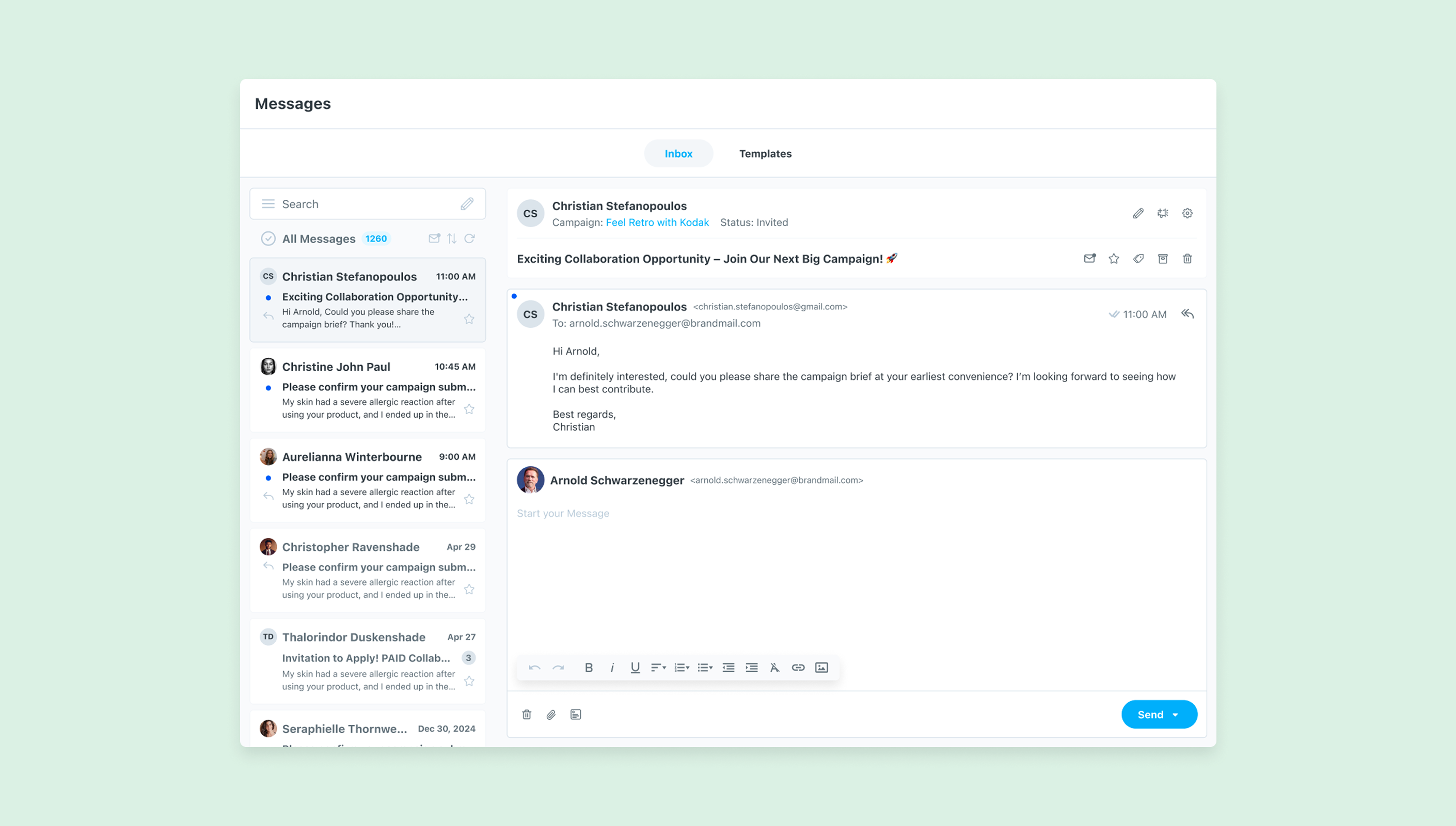
keeps composition inside the conversation context.
01 / Context and stakes
Messaging existed inside the product, but outside the workflow.
For teams managing many creator or campaign conversations, communication behaved more like a basic utility than a connected working surface.
Users needed to read and respond while keeping campaign, content, and relationship context in mind. Moving away from the conversation interrupted focus. As volume grew, chronological browsing alone also made important threads harder to categorize and rediscover.
02 / Evidence of the problem
The issue was larger than an outdated inbox.
User feedback and workflow observations pointed to two connected problems: losing context while responding and losing time while finding conversations again.
The redesign treated context loss and retrieval friction as one connected workflow problem. That framing kept the work focused on the moments where teams switched views, searched again, or reopened a conversation simply to recover information.
03 / Decision one
Keep replies inside the conversation.
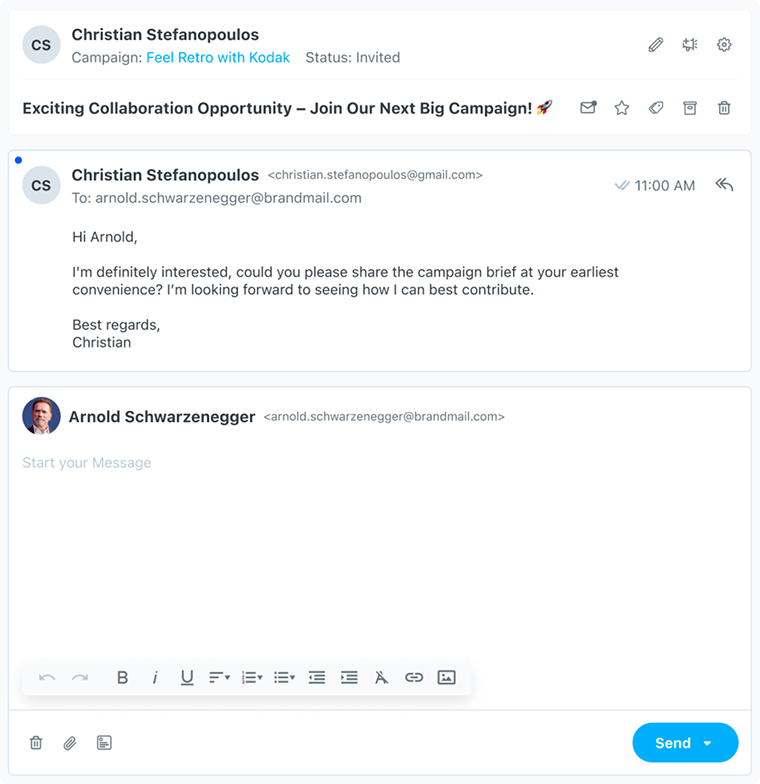
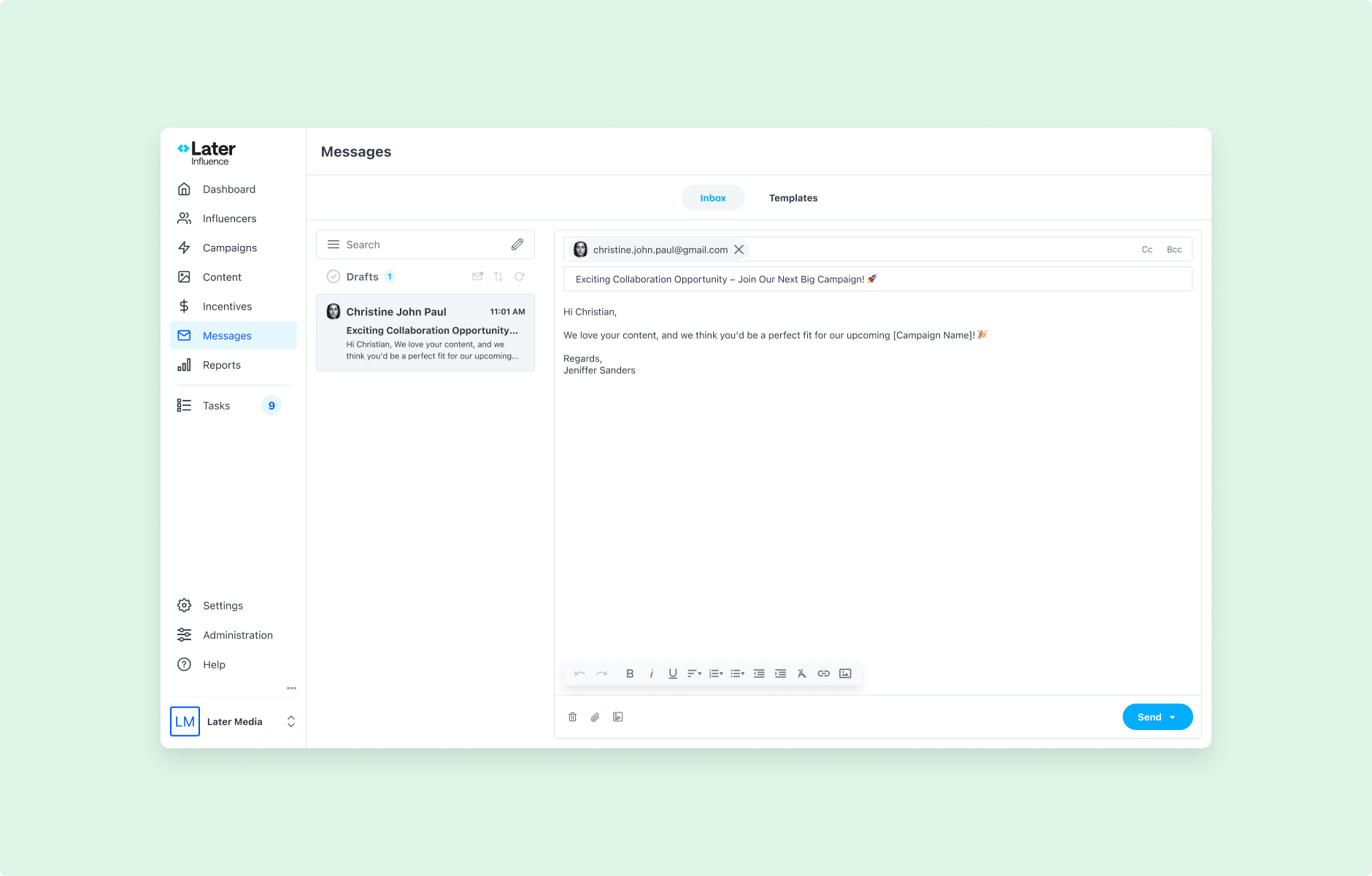
Bringing composition into the thread reduced the need to leave the page and helped users respond with the relevant conversation still visible.
The inline editor was designed as part of the working surface rather than a separate destination. Message content, response controls, and campaign context remain spatially connected.
04 / Decision two
Organize around the team’s mental model.
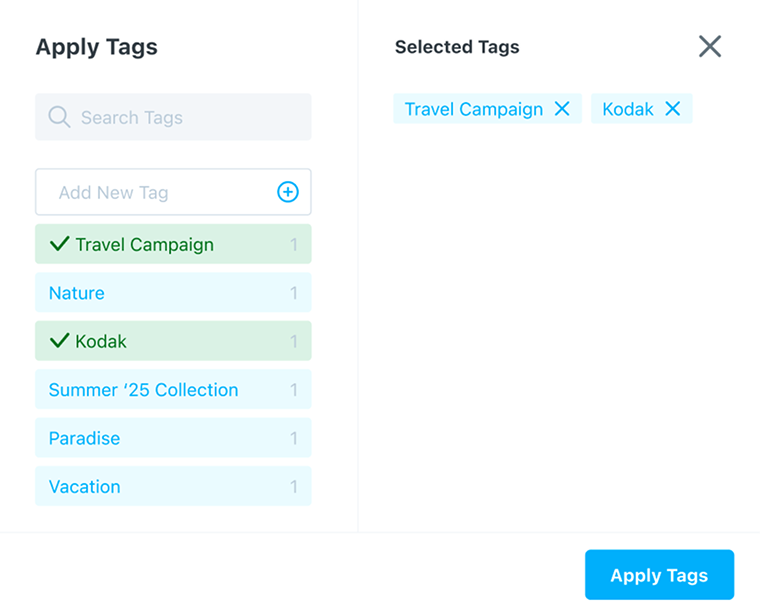
Flexible tags let teams group communication by topic, priority, campaign, or another shared category instead of relying only on chronology.
The tag model stayed deliberately flexible so teams could apply a shared vocabulary without forcing every campaign or working style into a single rigid taxonomy.
05 / Decision three
Make high-volume triage easier to scan.
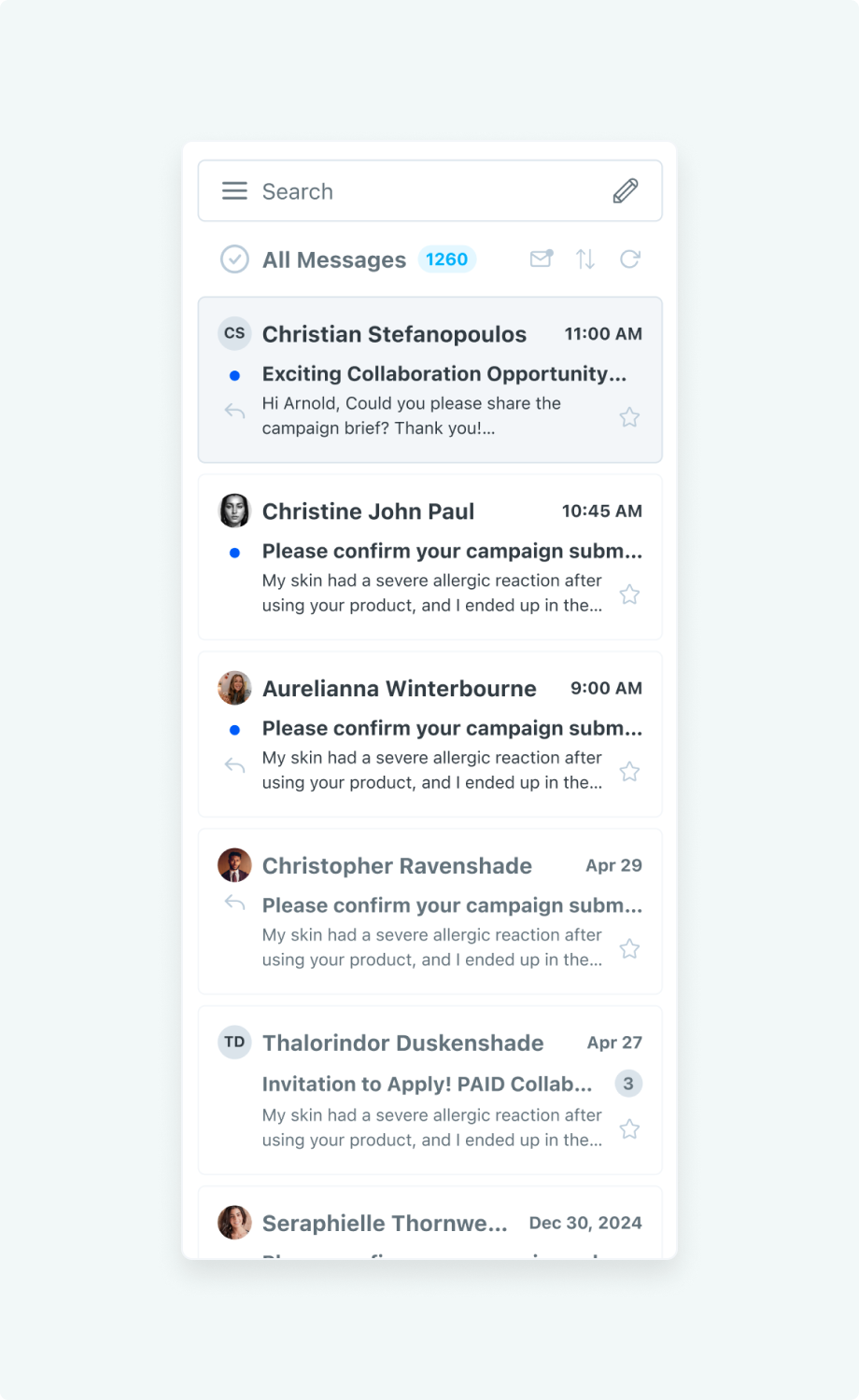
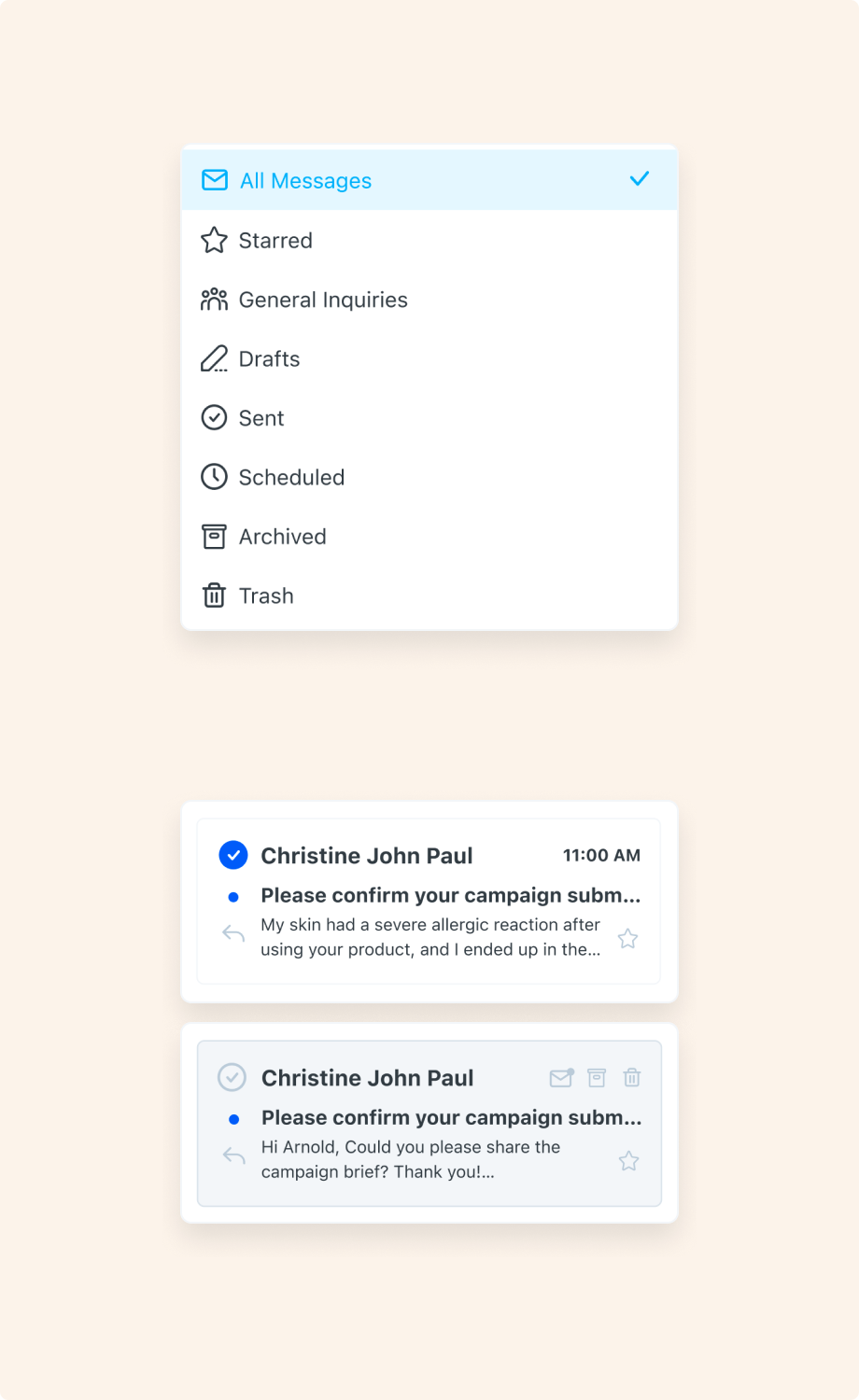
A clearer hierarchy exposed message state, participants, status, and relevant actions without asking users to open every thread.
Folders and status categories provided stable orientation, while the row hierarchy kept state and relevant actions visible without turning every conversation into a dense control panel.
06 / The final system
A connected workflow, not a gallery of screens.
- 01Find or filter a conversation.
- 02Understand its campaign and participant context.
- 03Read and respond inline.
- 04Tag or update the conversation state.
- 05Return to the relevant work without losing context.
07 / Outcome and evidence
One connected surface for conversation work.
Inline composition, flexible organization, and a clearer inbox hierarchy work as one system: each decision reduces a different source of interruption while preserving the campaign context teams need.
08 / Reflection
The strongest decision was keeping communication attached to its context.
The project shows how a small-seeming utility can become a higher-leverage workflow when interaction, organization, and product context are designed together.
The lasting lesson is that “messaging” is not a self-contained feature. Its value depends on how well the surrounding product keeps people, campaign information, message state, and the next action connected.
A separate Instagram-comment workflow built around post context, commenter history, profile switching, and platform reply limits.