01 / Design systems · Later
Later Product Design System
A product language expressed through shared foundations, reusable variables, component rules, and documentation for consistent product application.
60-second summary
A growing product needed a shared reference for creating consistent interface decisions across product work.
Organize foundations, variables, reusable objects, and component guidance in one documented product reference.
Foundation and component documentation, product-system framing, and application of shared patterns in product work.
A public reference that makes foundational variables, component structure, and intended usage easier to inspect.
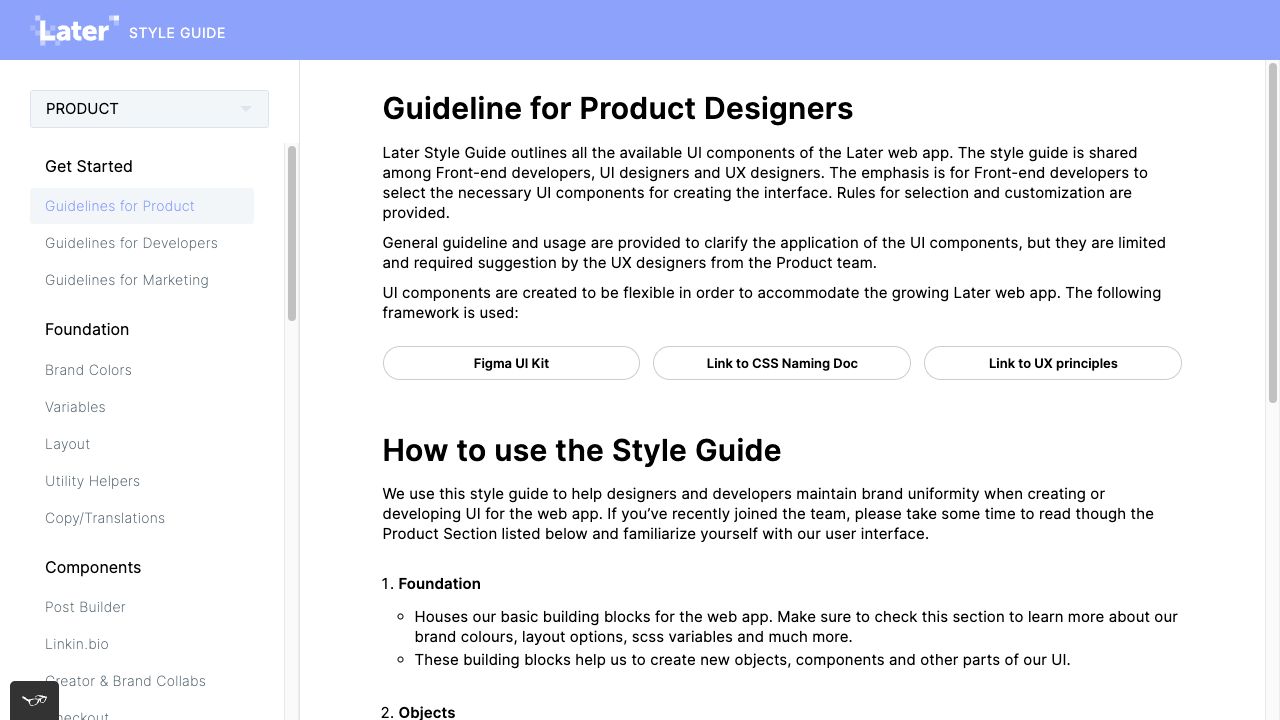
The product guide frames shared principles and implementation guidance as part of everyday design work.
01 / Context and scale
A shared reference makes the product language legible.
The public guide brings product foundations, reusable objects, components, and responsive examples into one navigable reference.
Its information architecture moves from onboarding and foundations to components, objects, and responsive product pages. That structure gives designers and developers a consistent place to inspect available patterns and their intended use.
- Guidance for product and development audiences
- Foundations, components, and reusable objects
- Responsive product examples
02 / Foundations and tokens
Make core decisions visible and reusable.
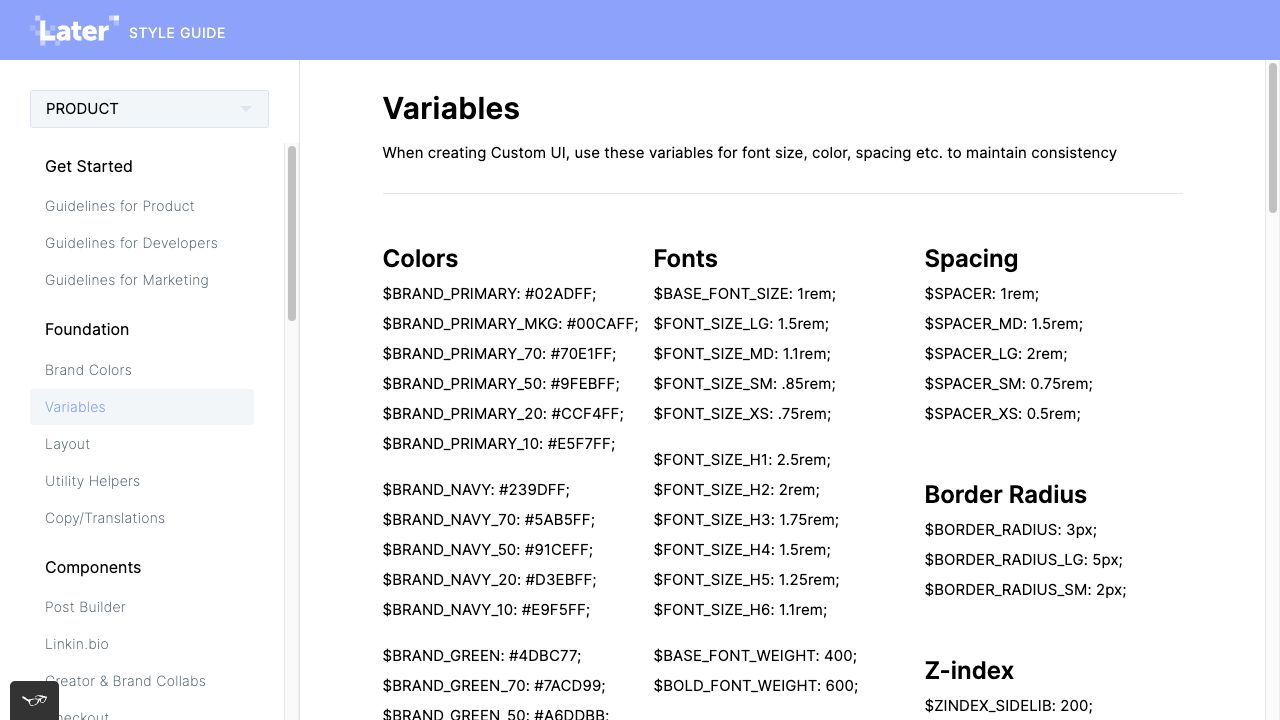
The Variables page records recurring choices for color, type, spacing, border radius, and stacking.
The public guide groups named values under familiar foundation categories, giving designers and developers a concrete reference for creating custom UI consistently and carrying those decisions into product work.
03 / Component anatomy
Anatomy turns a visual pattern into a documented component.
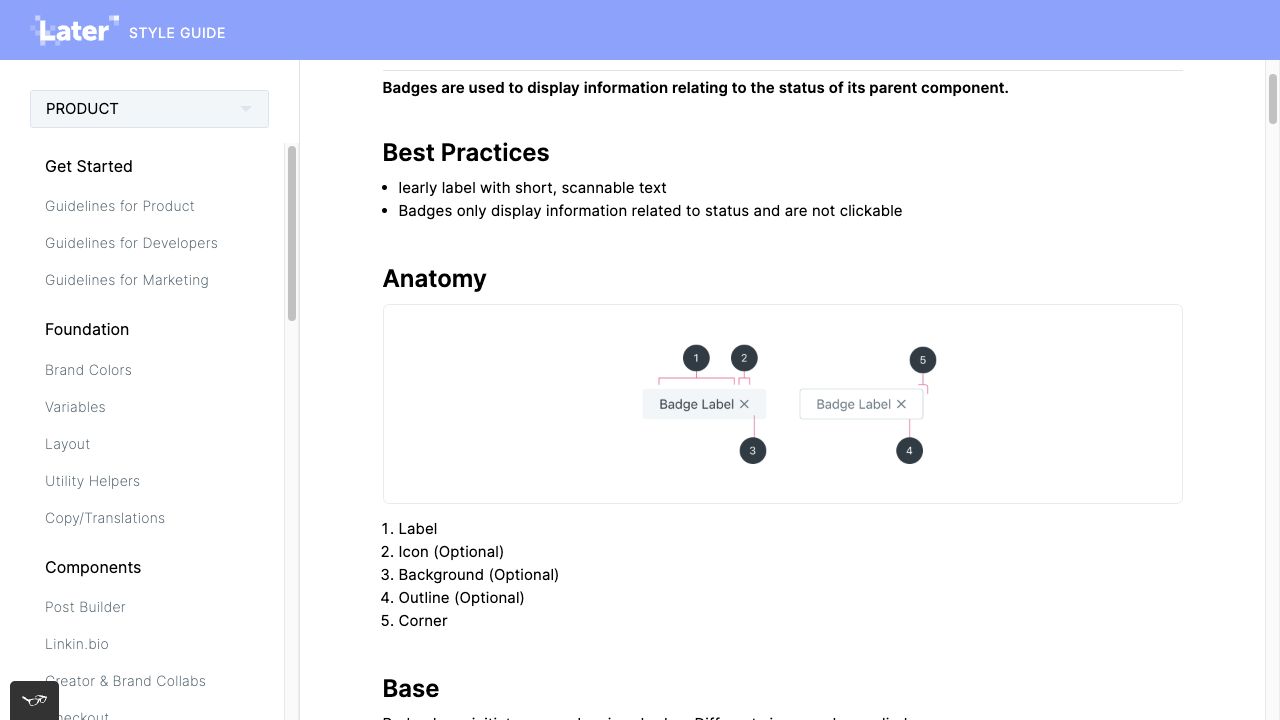
The Badge page identifies its label, optional icon, optional background, outline, and corner alongside usage guidance.
The specification makes structure and intended use explicit: badges communicate status information and are not clickable, while the anatomy separates required and optional parts. Nearby HTML, Ember, and React tabs connect the visual rules to code-facing documentation.
04 / Documentation in product context
The reference is organized around product application.
The guide pairs foundations and component specifications with responsive objects and page-level examples.
Its navigation connects variables and reusable patterns to areas such as Post Builder, Linkin.bio, Checkout, and responsive product pages. The visible relationship between those layers shows how shared decisions are documented alongside the contexts where they are intended to be used.
- Trace foundation choices into component guidance
- Use anatomy and best practices to evaluate component fit
- Connect system reference to responsive product examples
Outcome and reflection
A documented bridge from foundations to product patterns.
The public system brings foundations, variables, component anatomy, and product-oriented examples into a single reference. Its structure makes the interface language easier to inspect and apply without presenting the system as a standalone gallery of components.
The strongest evidence in this case is the relationship between layers: named variables establish reusable decisions, anatomy explains component structure, and product-oriented documentation shows where those rules are meant to be used.